
Most people learn Russian by translating it first, word by word, sentence by sentence, thought by thought. At the beginning, this works. Later, it quietly becomes the biggest obstacle.
This edition explores how to make that shift. Not through abstract theory, but through practical habits, linguistic insight, and cultural context that help Russian become a language you think in, not one you convert.
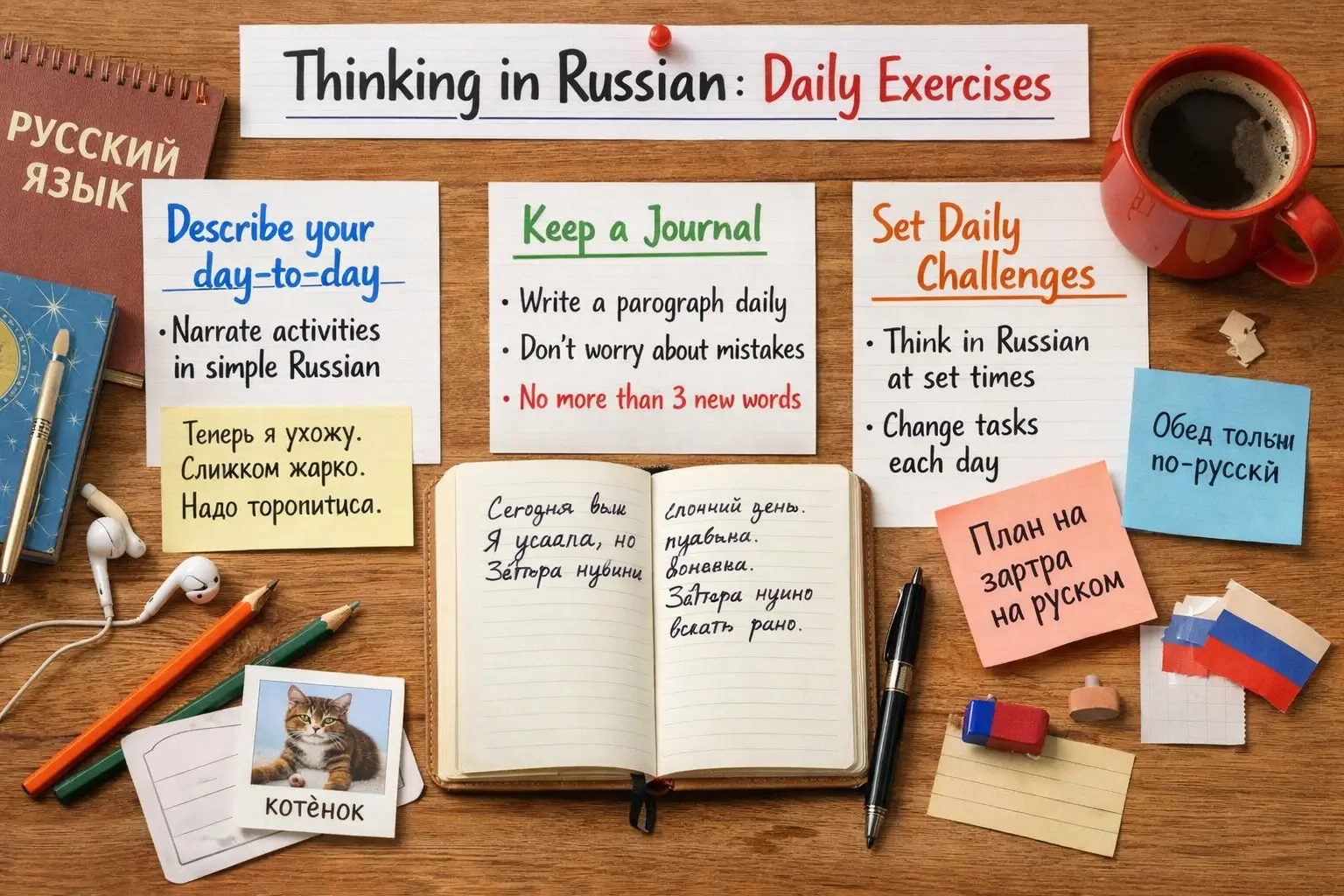
How to Think in Russian Instead of Translating from English
Most learners get stuck translating everything from English first. It works at the beginning, but later it slows you down, breaks your flow, and makes your Russian sound stiff or unnatural.
Real fluency starts when Russian becomes the default, not the conversion.
This guide shows you how to move away from mental translation and into direct thinking, using practical habits, mindset shifts, and simple techniques you can apply immediately.
Everyday Expressions
Russian: “Ничего” (nichyegó)
Meaning: Literally “nothing,” but used to mean it’s fine, no problem, never mind, or it’ll pass, depending entirely on context.
Why it’s fascinating:
Ничего is one of the most flexible words in Russian. It can signal reassurance, acceptance, emotional restraint, or quiet endurance. The same word can comfort, dismiss, or console, without changing form.
Example:
- Как дела?
- Ничего.
“How are you?”
“Alright.” (literally: “Nothing.”)
Why people love it:
Because it reflects a cultural attitude toward hardship. Not everything needs to be fixed or explained. Sometimes, things are simply endured. Language here doesn’t dramatise difficulty, it absorbs it.
Logic Behind Linguistics
Why Russian Allows Extreme Word Order Freedom
Russian sentences can be rearranged in ways that would sound completely wrong in English, without changing grammatical meaning.
Example:
Я люблю тебя.
Тебя люблю я.
Люблю я тебя.
All mean “I love you”, but each shifts emphasis; emotion, contrast, or poetic tone.
Why this happens:
Russian relies on case endings, not word order, to mark grammatical roles. This gives speakers freedom to move words around for style, focus, or emotional weight.
Instead of using extra words, Russian uses structure to highlight what matters most.
Books We Recommend
The New Penguin Russian Course by Nicholas J. Brown
One of the most trusted and enduring introductions to Russian, designed for serious beginners who want structure without intimidation.
Why it’s worth reading:
Builds grammar step by step with clarity
Explains cases, verbs, and stress patterns carefully
Focuses on real Russian, not simplified fragments
Ideal for learners who want a solid foundation, not shortcuts
This book doesn’t rush fluency. It builds confidence through understanding, the way Russian itself demands to be learned.

Music Without Borders
Song Spotlight: “Группа крови” (Gruppa Krovi) by Kino
“Группа крови” (“Blood Type”) became an anthem for a generation. Written in the late Soviet period, it captures uncertainty, identity, and quiet rebellion without slogans or anger.
The language is simple. The meaning is not.
Why it’s great for learners:
Clear, steady pronunciation
Short, direct sentences
Repetition reinforces structure
Lyrics reflect emotional understatement common in Russian
This is Russian as it’s often spoken: restrained, symbolic, and emotionally dense beneath the surface.
Fun Facts Worth Sharing
Russian has no word for “privacy” in the modern Western sense.
Instead, it relies on phrases and context to express personal boundaries. Historically, life was communalsha, red apartments, shared kitchens, shared lives, and the language reflects that social reality.
Why it’s interesting:
Language mirrors lived experience. When personal space isn’t guaranteed, it doesn’t become a central concept. Russian shows how social history shapes what gets named, and what doesn’t.

Join the Conversation
What’s your favourite example of how language reflects culture? Share your thoughts with our community on Facebook, X, and LinkedIn.
When you share Language Learners Hub, you’re not just inviting friends. You’re helping us create more free tools and resources for everyone.
What’s possible through referrals:
Pronunciation Cheat Sheet — available now for all members.
Mini Masterclass Video Pack — coming soon.
The Polyglot’s Private Collection — coming soon.