
In Spanish, meaning often lives between words rather than inside them, in tone, timing, and what’s left unsaid.
This week’s edition explores how Spanish navigates uncertainty with elegance, from everyday expressions that delay commitment to grammar that quietly encodes doubt.
Along the way, you’ll see how language can soften expectations, protect relationships, and make space for possibility, without ever needing to explain itself.
Everyday Expressions
Spanish: “Ya veremos”
Meaning: Literally “we’ll see,” but used to delay commitment, soften refusal, or keep options open without saying no.
Why it’s fascinating:
Ya veremos lives in the space between decision and avoidance. It’s not uncertainty exactly, it’s strategic ambiguity. The speaker may genuinely not know… or may know perfectly well and choose not to say.
It can mean:
Maybe
Probably not
Let’s not decide right now
I hear you, but don’t push
Tone and timing matter more than intention.
Example:
- ¿Vienes mañana?
- Ya veremos.
“Are you coming tomorrow?”
“We’ll see.”
Why people love it:
Because it reflects how Spanish often prioritises emotional comfort over precision. Ya veremos keeps conversations smooth, expectations flexible, and relationships intact. Not everything needs a hard yes or no, sometimes language buys time.
Logic Behind Linguistics
Why Spanish Uses the Future to Express Probability
In English, the future tense is about time.
In Spanish, it’s often about uncertainty.
Examples:
Estará en casa.
“He’s probably at home.”Serán las ocho.
“It must be around eight.”
Grammatically, these are future forms. Semantically, they’re guesses.
Why this happens:
Spanish uses verb tense not just to locate events in time, but to signal the speaker’s degree of certainty. Instead of adding extra words like maybe or I think, the verb itself carries doubt.
This means learners aren’t just learning when something happens, they’re learning how confident the speaker feels about it.
Books We Recommend
Learn Spanish Fast for Adult Beginners by Speak Abroad Academy
A practical, confidence-building introduction designed for adults who want results without overwhelm.
Why it’s worth reading:
Focuses on high-frequency vocabulary you’ll actually use
Builds speaking confidence early, not just passive knowledge
Uses short, structured lessons ideal for busy learners
Emphasises comprehension and intuition over memorisation
This book is about momentum. Instead of perfect grammar from day one, it helps Spanish start feeling familiar, something you can use, not just study.
Perfect for beginners who want to move quickly from learning about Spanish to actually thinking in it.

Music Without Borders
This Week’s Spanish Playlist 🇪🇸🇲🇽🇦🇷
This week’s playlist explores Spanish as it’s lived, not taught, across regions, rhythms, and registers.
From reflective ballads to upbeat pop and Latin classics, you’ll hear how Spanish changes tone, speed, and emotional colour without changing its core structures.
Why music helps:
Natural repetition trains listening without effort
Emotion anchors vocabulary in memory
Songs reveal informal grammar and real phrasing
Rhythm teaches sentence flow better than textbooks
You’re not just hearing Spanish.
You’re absorbing how it moves.
Listen here:
Endangered Languages/Voices at Risk
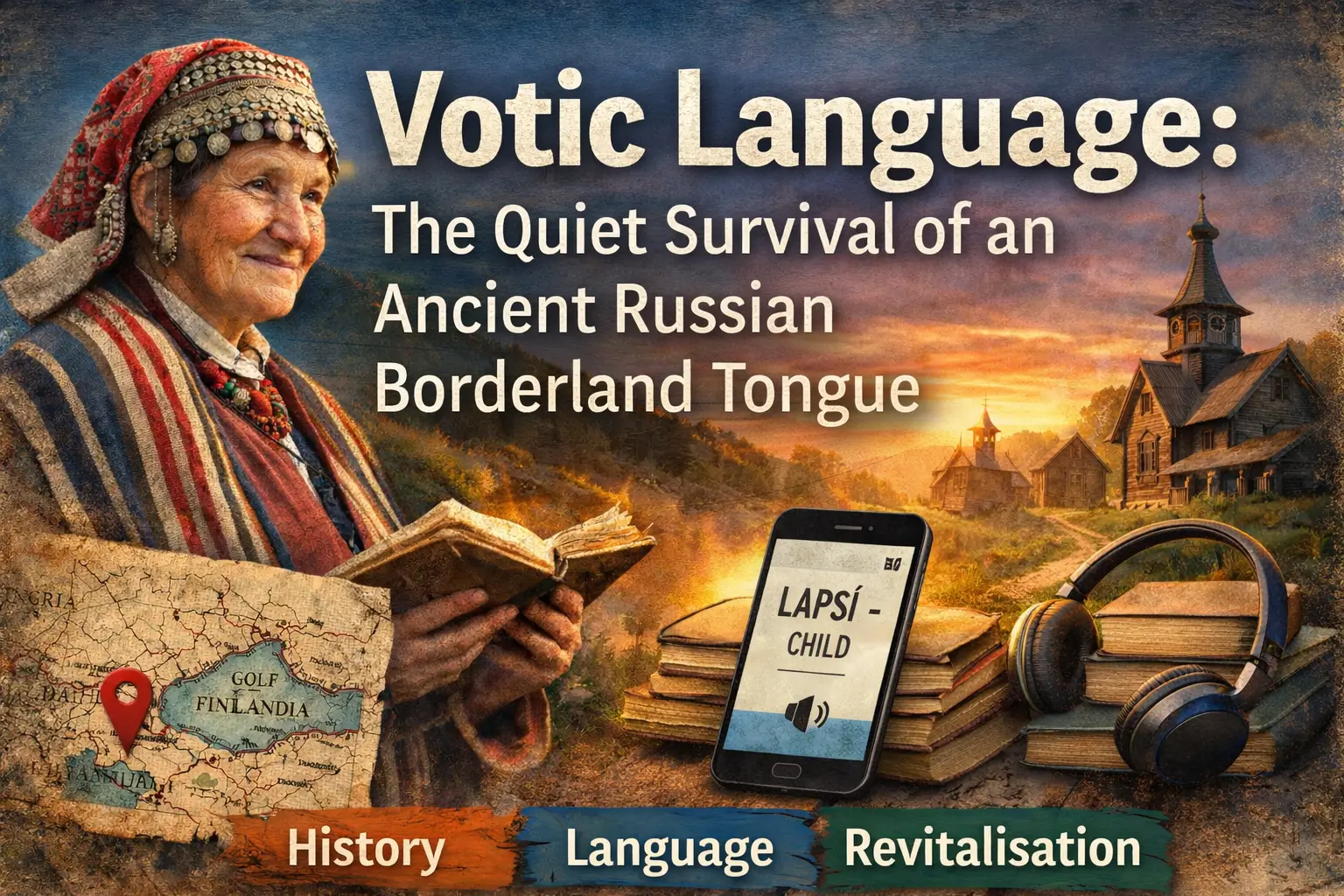
Votic Language: The Quiet Survival of an Russian Borderland Tongue
Along the forests and wetlands near Russia’s western edge, a language has been holding on. This is the Votic language, one of Europe’s most endangered tongues.
Votic is one of Europe’s most endangered languages. Ancient, Finno-Ugric, and once spoken across large parts of what is now north-west Russia. Only a handful of speakers remain.
Fun Facts Worth Sharing
Spanish has two past tenses for completed actions, and the choice subtly changes perspective.
Comí. = “I ate.” (finished, distant)
He comido. = “I’ve eaten.” (connected to now)
In many regions, especially Spain, the second form dominates everyday speech. In much of Latin America, the first is preferred.
Why it’s interesting:
The difference isn’t grammatical, it’s psychological. Spanish speakers choose how close an event feels to the present. The past isn’t just something that happened. It’s something you decide how far away it is.

Join the Conversation
What’s your favourite example of how language reflects culture? Share your thoughts with our community on Facebook, X, and LinkedIn.
When you share Language Learners Hub, you’re not just inviting friends. You’re helping us create more free tools and resources for everyone.
What’s possible through referrals:
Pronunciation Cheat Sheet — available now for all members.
Mini Masterclass Video Pack — coming soon.
The Polyglot’s Private Collection — coming soon.