
German isn’t chaotic. It’s systematic.
Once you understand how separable verbs and compound words actually function, everything starts making sense.
Today’s edition is about structure, logic, and how to remember what you learn.
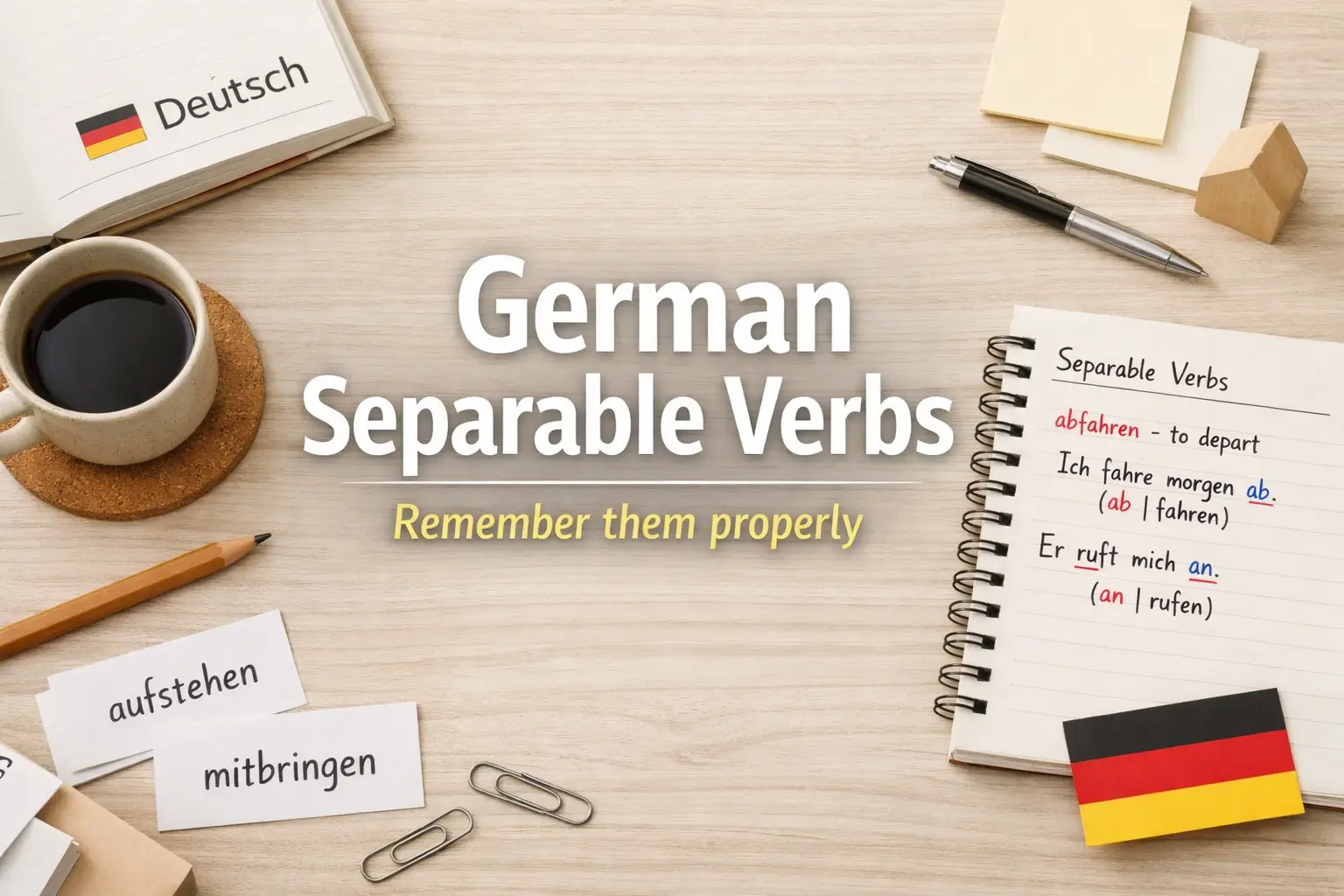
Learn German Separable Verbs (And Actually Remember Them)
Separable verbs are one of the most confusing parts of German. Not because they’re random, but because they’re often taught badly.
You learn a verb like ankommen, then suddenly the prefix disappears from the end of the sentence, and everything feels wrong.
Everyday Expressions
German: “Na?”
Meaning: There’s no direct English equivalent.
“Na?” is a short, informal greeting that can mean:
“Well?”
“So?”
“How’s it going?”
“What’s up?”
All in just one sound.
Why it’s fascinating:
It’s incredibly flexible. The meaning depends entirely on tone and context.
It can:
Start a conversation
Show curiosity
Signal mild surprise
Check in with someone
Example:
A: Na?
B: Alles gut. Und bei dir?
(“All good. And you?”)
Or:
A: Na, hast du es geschafft?
(“So… did you manage it?”)
Logic Behind Linguistics
Why German Loves Compound Words
German is famous for long words like:
Krankenhausverwaltung (hospital administration)
Geschwindigkeitsbegrenzung (speed limit)
Handschuh (literally “hand shoe” = glove)
Why this happens:
German combines smaller words into one single compound noun.
Instead of saying:
“Speed limit sign”
German says:
Geschwindigkeitsbegrenzungsschild
Everything becomes one structured unit.
Why this works:
German grammar is highly systematic.
The last word determines the main meaning.
Everything before it modifies it.
Books We Recommend
Learn German Fast for Adult Beginners
A practical, confidence-building introduction designed for adult learners who want to get comfortable with everyday German quickly and effectively.
Why it’s worth reading:
Focuses on high-frequency vocabulary learners actually use
Emphasises speaking and listening over rote memorisation
Uses clear, structured lessons you can build on daily
Helps learners think in German rather than translating
Perfect if you want to start using German right away , not just learn about it.

Music Without Borders
Song Spotlight: “Ohne dich” by Rammstein
“Ohne dich” (“Without you”) by Rammstein is a powerful modern rock ballad that uses relatively simple German vocabulary in a deeply emotional context.
Why it’s great for learners:
Clear vowel sounds, helps train your German ear
Repetition of key emotional words, builds memorable vocabulary
Slow-to-moderate tempo, ideal for listening practice
Emotion-driven delivery, meaning becomes easier to infer
Listening to emotionally charged songs helps your brain connect sound and meaning naturally, much more effectively than memorising isolated word lists.
Fun Facts Worth Sharing
German has a word for enjoying someone else’s bad luck.
Schadenfreude
Schaden = damage
Freude = joy
It literally means “damage-joy”.
English uses the German word directly because there isn’t a single-word equivalent that captures it perfectly.
Why this is interesting:
German is very good at creating precise emotional vocabulary by combining words. Instead of inventing something abstract, it builds meaning logically.
And here’s the twist:
Almost every language has a word for this feeling, but not every language talks about it openly.

Join the Conversation
What’s your favourite example of how language reflects culture? Share your thoughts with our community on Facebook, X, and LinkedIn.
When you share Language Learners Hub, you’re not just inviting friends. You’re helping us create more free tools and resources for everyone.
What’s possible through referrals:
Pronunciation Cheat Sheet — available now for all members.
Mini Masterclass Video Pack — coming soon.
The Polyglot’s Private Collection — coming soon.