
Learning a language isn’t just about adding more words. it’s about noticing how meaning moves.
This edition looks at German as a living system: structured, expressive, and deeply human. If you’ve ever felt confused, curious, or quietly impressed by how language works, you’re in the right place.
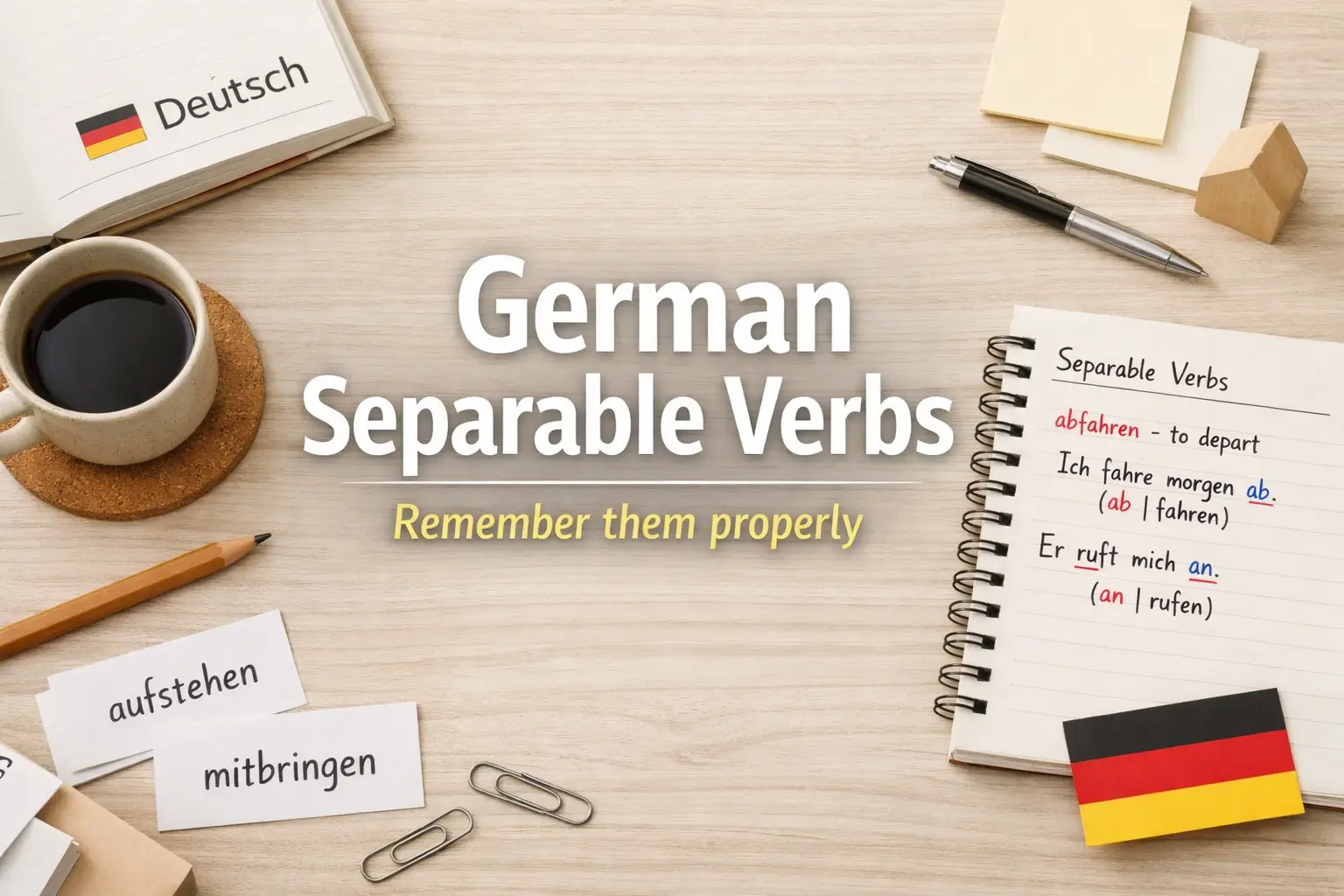
Learn German Separable Verbs (And Actually Remember Them)
Separable verbs are one of the most confusing parts of German. Not because they’re random, but because they’re often taught badly.
You learn a verb like ankommen, then suddenly the prefix disappears from the end of the sentence, and everything feels wrong.
Everyday Expressions
German: “Treppenwitz”
Meaning:
A witty comeback you think of after the moment has passed, literally, “staircase joke.”
Why it’s fascinating:
This word captures a universal human experience: you rehearse the perfect reply too late. English needs a whole sentence to explain it, while German wraps it all into one memorable term.
Example:
Am nächsten Tag fiel mir der perfekte Satz ein – so ein richtiger Treppenwitz!
“The perfect line came to me the next day, a real ‘staircase joke’!”
Why people love it:
It shows how language names psychological moments, not just physical objects or actions, and how German can be beautifully precise about human thought.
Logic Behind Linguistics
Why Some Languages Mark Gender and Others Don’t
Many languages assign gender to nouns, but how and why they do this varies widely.
Examples:
German:
Uses three genders, der (masculine), die (feminine), das (neuter), affecting articles and agreement.Swahili:
Has noun classes that function like grammatical genders, but based on semantic categories rather than natural gender.Persian:
No grammatical gender, the same forms are used regardless of masculine or feminine meaning.
Why this happens:
Gender systems are tools for organisation, they help languages structure agreement and reference, but they aren’t universal. Some reflect history and sound change; others show how communities conceptualise categories differently.
Language doesn’t just describe gender, it uses structure to guide how speakers link words in sentences.
Books We Recommend
Speak German in 90 Days: A Self Study Guide to Becoming Fluent by Kevin Marx
A practical, self-study roadmap to conversational German, designed to take you from beginner to confident speaker in 90 structured lessons.
Why it’s worth reading:
Breaks down grammar and vocabulary into manageable daily lessons
Teaches pronunciation and idioms native speakers actually use
Covers the equivalent of two years of classroom German, at your own pace
Perfect if you want structured fluency without overwhelm, textbooks and real speaking practice in one.

Music Without Borders
Song Spotlight: “Ich will” by Rammstein
“Ich will” by Rammstein is a German rock anthem built on simple language with intense emotion. The title literally means “I want,” but in the context of the song it becomes a bold demand to be seen, heard, and understood, making it a fascinating study piece for German learners.
Why it’s great for learners:
Repetition of simple phrases helps with listening comprehension
Strong rhythmic delivery makes pronunciation clear
The cultural energy behind the song shows how meaning goes beyond literal translation
Music like this turns German from text into cultural experience, sound, rhythm, and emotion included.
Fun Facts Worth Sharing
In Germany, there’s a word “Fernweh”, literally “distance pain”, meaning a longing for far-off places, the opposite of homesickness.
Why it’s interesting:
While English uses phrases to express wanderlust, German has a single word that captures the emotional mix of yearning and adventure.
Language doesn’t just name places, it names feelings about them.

Join the Conversation
What’s your favourite example of how language reflects culture? Share your thoughts with our community on Facebook, X, and LinkedIn.
When you share Language Learners Hub, you’re not just inviting friends. You’re helping us create more free tools and resources for everyone.
What’s possible through referrals:
Pronunciation Cheat Sheet — available now for all members.
Mini Masterclass Video Pack — coming soon.
The Polyglot’s Private Collection — coming soon.